
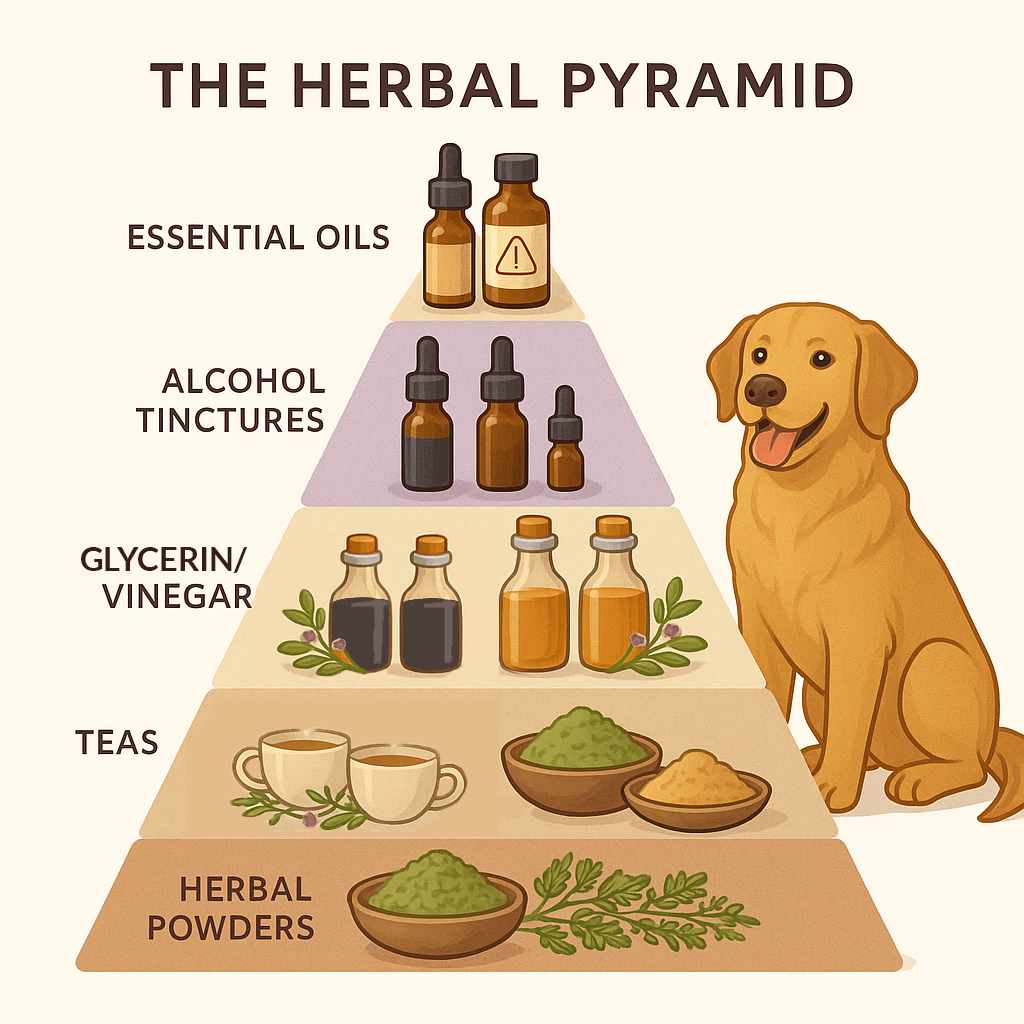
The Herbal Pyramid: Which Remedies Are Safest for Your Pet?
Understanding the Strength of Herbal Preparations: From Gentle Teas to Potent Oils
Herbs are one of nature’s greatest gifts—but just like chocolate, wine, and small dogs in sweaters, there’s a right time and place for everything.
Whether you’re giving your pup a sprinkle of herbs or a concentrated liquid drop, the form of the herb matters. How it’s prepared can determine how strong, how fast, and how effective it may be. That’s why we created this guide—The Herbal Pyramid—to help you climb from the most gentle herbal forms to the strongest, all while knowing exactly what’s in your hands (and in your dog’s bowl).
Ready to meet the pyramid? Let’s start at the bottom.
Base Level: Herbal Powders
Strength Level: Gentle & Steady
These are herbs in their simplest form—dried, ground, and powdered. Powders offer a low-impact way to support your dog’s body. They’re slow to absorb, best used consistently, and often act like herbal nutrition: reliable, but not rapid.
📌 Perfect for daily maintenance or adding herbal support into meals.
When to use:
- Long-term nutritional support
- Slow-acting balance over time
- Great for herbal “food-style” support
A Gentle Steep: Teas & Infusions
Strength Level: Comforting & Hydrating
Herbal teas are the unsung heroes of the herbal world. By steeping herbs in hot water, you extract water-soluble properties that soothe, hydrate, and calm. They’re easy to prepare and incredibly pet-friendly—just make sure the herbs are safe for dogs!
📌 Think of it as a warm herbal bath for the inside of the body.
When to use:
- Soothing the digestive system
- Encouraging hydration
- Calming anxious or unsettled pups
The Zingy Middle: Vinegar Extracts
Strength Level: Zesty & Mineral-Packed
Herbs steeped in apple cider vinegar? Now that’s functional flavor. Vinegar extracts offer gentle extraction, especially for minerals, and are often used as tonics to support digestion and detox. They’re not as potent as tinctures, but they have their charm.
📌 Perfect for daily cleanses, especially for picky eaters who need something different.
When to use:
- Gentle detox support
- Encouraging mineral intake
- Metabolic or circulatory tonics
Sweet & Gentle: Glycerin Extracts (Glycerites)
Strength Level: Light & Limited
Glycerin extracts are often chosen for their sweet taste and alcohol-free formulation, but when it comes to herbal strength, they offer only mild support. These preparations may be useful in less demanding situations, but they generally don’t deliver the same depth or potency as alcohol-based tinctures.
Because of their gentle nature, glycerites are typically reserved for very mild cases, or for pets with specific sensitivities where stronger options may not be appropriate.
📌 A light touch when minimal support is needed—less effective, but sometimes better than nothing.
When they’re occasionally used:
- Extremely mild, day-to-day support
- Sensitive animals who can’t tolerate stronger extracts
- Situations where potency isn’t a primary concern
Strong & Swift: Alcohol Tinctures
Strength Level: Fast, Focused & Full-Spectrum
When it comes to unlocking the full potential of herbal support, alcohol tinctures stand in a league of their own. Alcohol draws out a broader range of beneficial herbal compounds than other methods, offering more complete, fast-absorbing support for the entire body.
With a long shelf life, high bioavailability, and unmatched potency, alcohol tinctures are the go-to for pet parents and herbalists who want reliable results that work with the body’s natural processes.
📌 When time matters and the body needs backup, alcohol tinctures deliver.
When to use:
- For overall support from head to paw
- Digestion, immunity, mobility, heart—you name it
- When quick, concentrated herbal support is preferred
- For short to long-term use that encourages overall body support
💧 Top Tier: Essential Oils
Strength Level: Potent & Precise
(Not recommended for pets)
These ultra-concentrated plant oils are powerful. It takes pounds of herbs to make just a small bottle. Essential oils should never be used undiluted and, for pets, should never be used internally without expert guidance.
📌 Small drops, big effects—but only when used safely.
When to use (cautiously):
- External support (diluted!)
- Emotional and behavioral support via aroma
- Topical care with professional guidance
The Power Is in the Preparation
Each level of the pyramid has its time and place. You wouldn’t use an essential oil to add fiber to your pet’s diet (hello, powders), and you wouldn’t count on a tea to deliver more immediate support for natural purification processes (that’s tincture territory).
The goal is to match the strength of the herb to your dog’s needs. Here’s a quick cheat sheet:
| Herbal Form | Best For | Strength |
|---|---|---|
| Powders | Long-term support, nutrition | Gentle |
| Teas | Calming, hydration, mild action | Mild |
| Vinegar Extracts | Mineral support, digestion | Mild+ |
| Glycerin Extracts | Wellness, sensitive bodies | Medium |
| Alcohol Tinctures | Fast-acting, more potent support | Strong |
| Essential Oils | (Not recommended for pets) Targeted, topical or aromatic use | Potent |
Final Thoughts: Choose Your Strength Wisely
Herbs are incredible. But knowing how they’re prepared—and what that means for your pet’s body—is the secret sauce to smart supplementing. Whether you’re working with the sweet simplicity of a glycerite or the herbal punch of a tincture, understanding The Herbal Pyramid empowers you to make the right choice every time.
Remember: good taste doesn’t equal better results. Sometimes, mother nature unflavored is exactly what your pet needs.